
Our visitors arrive in Waterloo with a train ride on their minds. Upon boarding the train at 210 West Williams Street, guests look forward to settling into a vintage passenger car, watching the Finger Lakes countryside roll by the window, and enjoying a few hours away from the pace of everyday life.
But many discover something unexpected upon arrival: Waterloo itself is worth exploring.
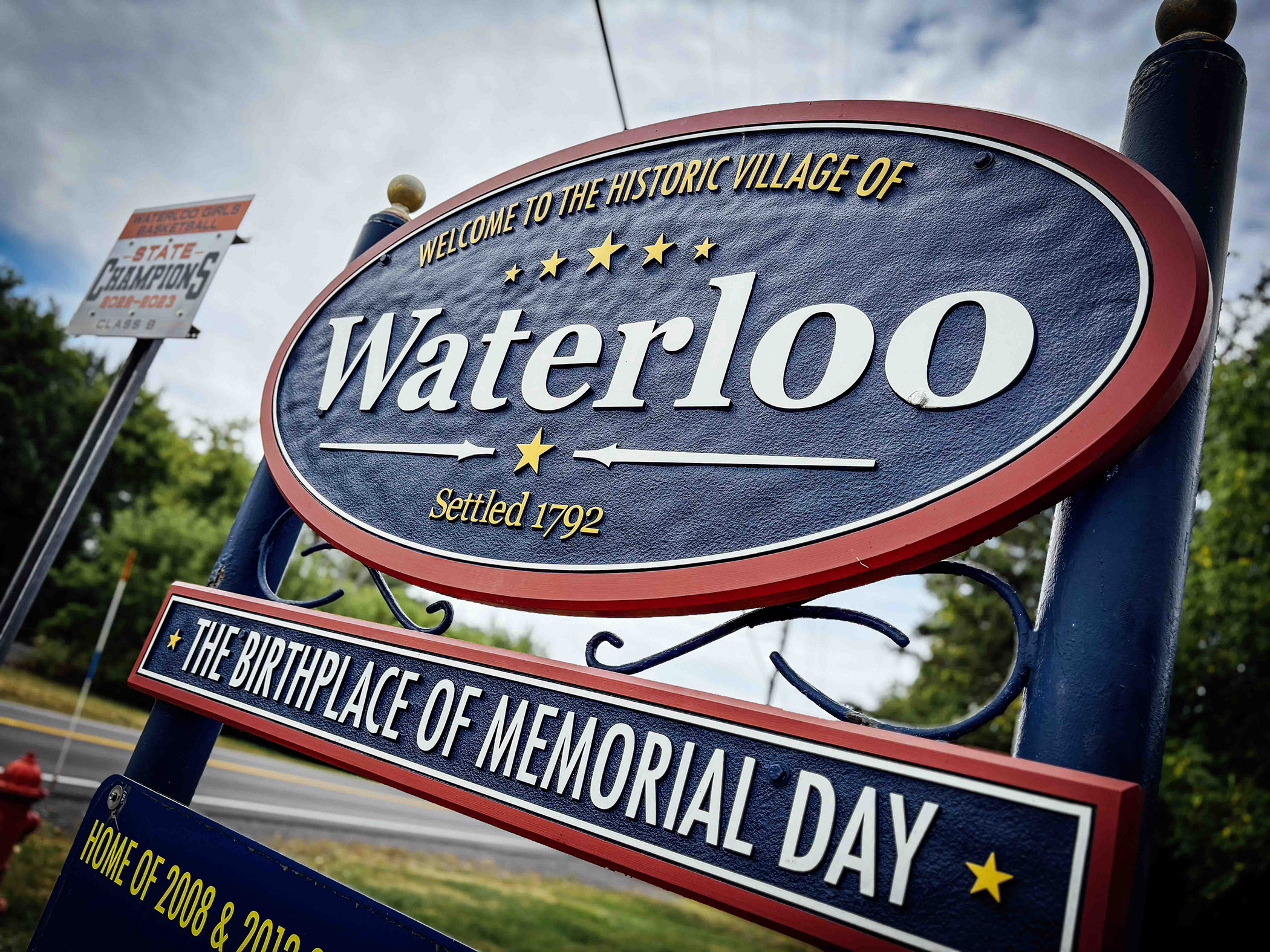
Situated between Cayuga and Seneca Lakes, Waterloo occupies a unique place in American history. It is officially recognized as the Birthplace of Memorial Day, and together with neighboring Seneca Falls, it helped shape some of the most important chapters in the nation’s story. Today, it serves as a welcoming gateway to the Finger Lakes, offering historic sites, wineries, lakeside scenery, shopping, and small-town charm within minutes of the station.
Before You Board
If you’re arriving early for your train ride, take some time to explore downtown Waterloo. The village’s broad streets, historic buildings, and memorials reflect a community deeply connected to its past.
A short walk from the center of town is the National Memorial Day Museum, where visitors can learn how local remembrance ceremonies following the Civil War eventually evolved into the national holiday observed across the United States today. Waterloo’s role was formally recognized by Congress in 1966, making it one of the Finger Lakes’ most historically significant destinations.
Just a few minutes away is another landmark with national significance. The historic M’Clintock House, located in Waterloo, played an important role in organizing the 1848 Women’s Rights Convention in nearby Seneca Falls, an event that helped launch the women’s rights movement in America.
Following the Shores of Cayuga Lake
Of course, for our guests, one of the most remarkable aspects of the Finger Lakes isn’t found in a museum or historic district—it’s the railroad route itself.
Departing Waterloo, the line traces a path first established more than a century ago, carrying passengers through the agricultural landscapes and small communities that have long defined the Finger Lakes. As the train approaches Cayuga Lake, the scenery begins to change. Open farmland gives way to glimpses of the lake, wooded shorelines, vineyards, and broad views across one of New York’s most beautiful bodies of water.
Stretching nearly forty miles from north to south, Cayuga Lake is the longest of the Finger Lakes and among the deepest. Its waters help create the unique climate that has made the region internationally known for wine production, while its shoreline has attracted generations of travelers seeking recreation, scenery, and escape.
From the comfort of a vintage passenger car, guests experience the lake much as travelers once did during the golden age of rail travel. The journey offers a perspective unavailable from highways, revealing quiet coves, distant hillsides, and landscapes that unfold gradually beyond the train window. It is a reminder that some places are best experienced at the pace of a train.
For many passengers, the ride itself becomes the highlight of the day—not simply because of the destination, but because the route offers a rare opportunity to experience the Finger Lakes from a viewpoint that few visitors ever see.
Explore Beyond the Station
One of Waterloo’s greatest advantages is its location.
Within ten minutes, visitors can reach Seneca Falls, home of the Women’s Rights National Historical Park. A little farther west lies Geneva, with its lakeside parks, restaurants, and wineries overlooking Seneca Lake. To the east, Cayuga Lake offers some of the Finger Lakes’ most scenic drives and celebrated wine trails.
Many of our passengers turn their train ride into a full-day adventure by combining an excursion with visits to local wineries, breweries, museums, and waterfront attractions.
Hidden Stories and Curious Places
Like many historic communities, Waterloo has its share of unusual stories.
One of the village’s most intriguing landmarks is the Scythe Tree, where a rusted scythe blade remains embedded in a tree trunk as a memorial to a local Civil War soldier who never returned home. Generations of residents have preserved the unusual marker, creating one of the Finger Lakes’ most memorable pieces of folk history.
Railroad enthusiasts may also appreciate Waterloo’s connection to the broader transportation history of the Finger Lakes, where railroads, canals, steamships, and interurban electric railways once connected communities throughout the region.
Shopping, Dining, and Entertainment
Whether you’re looking for a quick lunch before departure or an evening out after your trip, Waterloo offers easy access to some of the Finger Lakes’ most popular destinations.
The Finger Lakes Premium Outlets draw visitors from across the region, while nearby restaurants, wineries, breweries, and cafés provide plenty of opportunities to sample local flavors. For those extending their stay, del Lago Resort & Casino offers dining, entertainment, and overnight accommodations just outside the village.
Make a Weekend of It
Many guests arrive expecting to spend a few hours on the train and leave wishing they had planned a longer stay.
Waterloo sits at the crossroads of the Finger Lakes, within easy reach of waterfalls, wineries, historic sites, lakeside villages, and scenic drives. Ithaca, Watkins Glen, Rochester, Syracuse, Geneva, and Canandaigua all make excellent additions to a weekend itinerary.
The train may be what brings you here. The Finger Lakes are what will make you want to come back.
And Waterloo just happens to be where both journeys begin.

